Wizz Air: When an Aircraft Becomes an Extension of the Office
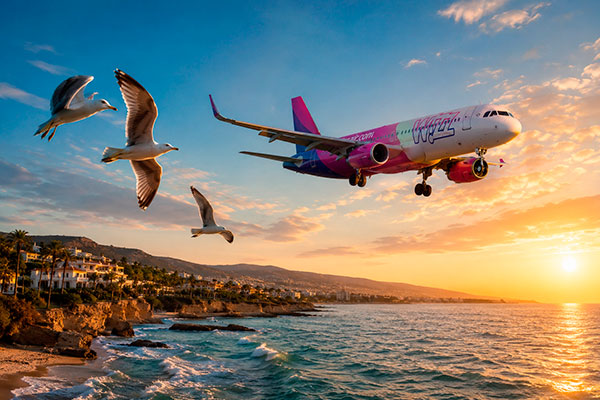
Sometimes the market looks at an airline and sees nothing more than an aircraft, fuel costs and load factors. But sometimes something greater happens: a carrier begins to understand where its passengers are flying and why they are taking to the skies in the first place.
In June 2026, Wizz Air carried 7.48 million passengers, an increase of 27.2% compared with the same month last year. Capacity rose by 27.5% to 8.14 million seats, while the load factor remained an impressive 91.9%. The company also crossed a new operational milestone by operating more than 1,200 flights in a single day for the first time in its history, while maintaining strong punctuality and operational performance.
Yet the most important signal investors noticed was not the number of seats or the percentage of aircraft filled.
Wizz Air confirmed the rollout of Starlink satellite internet across its fleet beginning in 2027, becoming the first European ultra-low-cost airline to take such a step. Many investors had been waiting to see the impact of partnering with Elon Musk's creation, and the first signs of that future are now beginning to emerge.
A new generation of passengers no longer chooses simply a ticket from point A to point B. It chooses speed, logistics and uninterrupted access to information. The modern traveller wants to step off an aircraft having already sent emails, completed video calls and closed deals. For them, a flight is no longer a pause between two parts of life but an extension of life itself.
There is something in this that recalls the flight of that famous seagull which once realised that there is no limit to speed except the one it sets for itself. While some airlines continue debating the price of a sandwich on board, others are trying to ensure that passengers no longer notice the boundary between the ground and the sky.
At the same time, the company's growth continues to be accompanied by improving efficiency. Despite the increase in flight activity, CO₂ emissions per passenger kilometre declined by 3.3% to 49.5 grams, supported by fleet renewal and improved aircraft utilisation.
Naturally, challenges remain. Pressure on profitability, leverage and the continuing impact of Pratt & Whitney engine issues continue to concern investors. Nevertheless, management continues to execute its fleet expansion programme and has demonstrated an ability to maintain a high operational tempo even during a period of rapid growth.
Andrievskii Verdict
For many years, the market valued Wizz Air as little more than another European low-cost carrier. Gradually, however, the company is evolving into a technology-enabled transportation platform, where the aircraft itself becomes part of the passenger's digital infrastructure.
A generation that grew up with smartphones in its hands is no longer prepared to disconnect from the world for three hours simply because it is flying. Access to information is becoming as important as a window seat once was. Wizz Air recognised this shift earlier than many of its competitors and chose to embrace the risk of moving first.
Sometimes leadership begins not with the size of a fleet, but with the willingness to climb a little higher than everyone else and look beyond the horizon.
Aleksei Andrievskii | Advisory Board Member, Bendura Bank AG | Liechtenstein