Why Wizz Air Could Be the Most Mispriced Airline in Europe
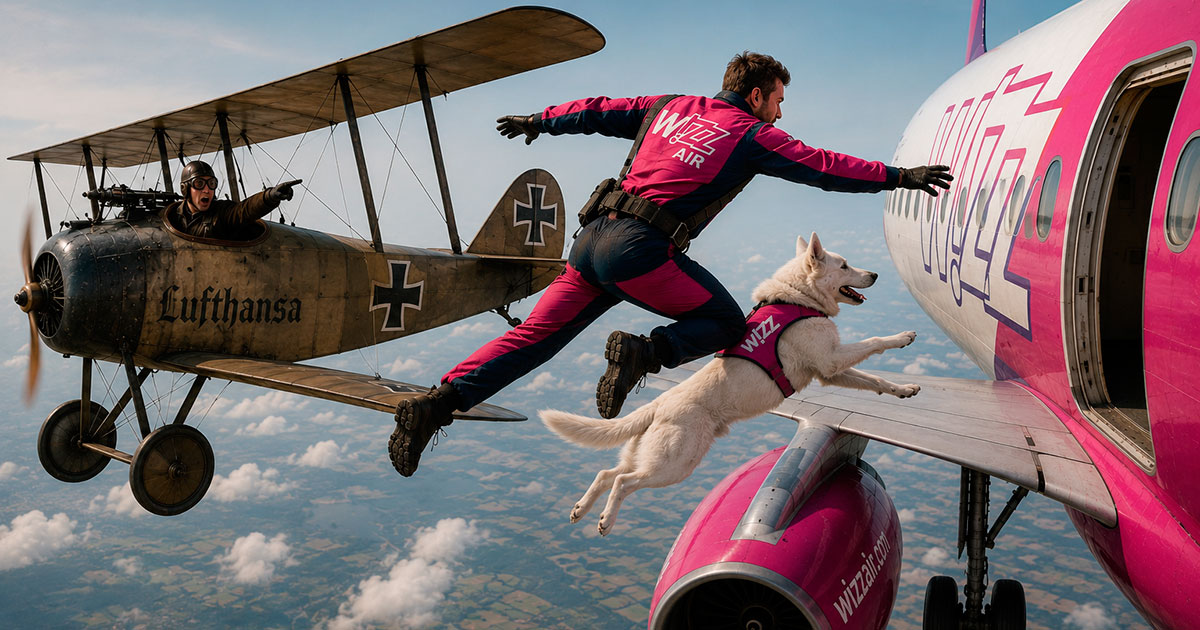
Investors love certainty because certainty feels safe. The problem is that certainty is usually expensive. Lufthansa and Air France already have plenty of supporters because their recovery stories are visible, their strengths are understood and much of the good news is already reflected in market expectations. Wizz Air sits in a different position. The market continues to value the company through the lens of the difficulties of the past two years rather than through the earnings power it may possess once those difficulties fade.
The well-publicised Pratt & Whitney engine inspections forced a significant portion of the fleet out of service, reducing capacity, profitability and investor confidence. The share price responded accordingly. Yet beneath the headlines the business itself continued to grow. Passenger numbers increased, market share expanded and the company retained one of the youngest and most fuel-efficient fleets in Europe while strengthening its presence across Central and Eastern Europe, where long-term aviation demand continues to grow faster than in many mature Western markets.
The key question for investors is not what happened during the engine crisis but what happens when it ends. Wizz Air does not need a new business model, a transformational acquisition or a strategic reinvention. It simply needs to return aircraft that are already owned, routes that are already established and customers that are already flying. When a growth company temporarily loses part of its earning power, the market often prices it as a structurally weaker business. When that earning power returns, the revaluation can be substantial.
This is where the investment case becomes particularly interesting. Every aircraft returning to service increases available capacity, improves asset utilisation, spreads fixed costs across a larger operation and enhances profitability. In the airline industry earnings frequently recover faster than revenue, and share prices often move long before the improvement becomes obvious in reported results. Markets rarely wait for certainty. They move when uncertainty begins to disappear.
There is another signal that deserves attention. On 19 June 2026, Wizz Air disclosed another management share transaction following a series of long-term equity awards granted to senior executives earlier this month. These filings are not spectacular insider purchases and they should not be exaggerated. Their importance lies elsewhere. The people responsible for restoring profitability and executing the next stage of growth are increasingly being rewarded through ownership rather than salary alone. Experienced investors have long understood that when management compensation becomes tied to long-term share performance, incentives become aligned with shareholders in a far more meaningful way.
The risks remain real. Engine-related disruptions have not completely disappeared, fuel prices remain volatile and geopolitics continues to influence the aviation sector. Yet those risks are precisely why the opportunity still exists. If every challenge had already been resolved, the shares would almost certainly trade at a materially higher valuation. Markets rarely offer exceptional upside without demanding some degree of uncertainty in return.
Andrievskii Verdict
Lufthansa may offer stability and Air France may offer a conventional recovery story. Wizz Air offers something potentially more powerful: a growing airline with a young fleet, attractive structural markets, improving industry conditions and a valuation that still reflects yesterday's problems rather than tomorrow's earnings. If operational normalisation continues and profitability returns toward historical levels, the market's reassessment of the company may ultimately be measured not in percentages, but in multiples.
Aleksei Andrievskii | Advisory Board Member, Bendura Bank AG | Liechtenstein