Why I Returned to Nestlé Shares
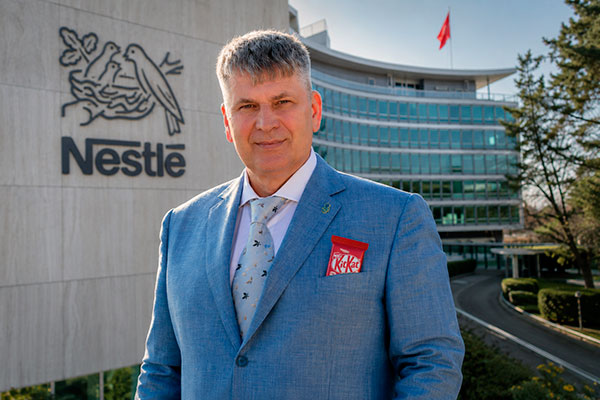
Sometimes the market becomes so fascinated with growth stories that it forgets about human habits. Yet people continue to drink coffee, feed their pets and buy food regardless of whether the economy is booming or arguing with recession.
That is one of the reasons why Nestlé has returned to my personal investment radar.
With a market capitalization exceeding $200 billion, the company currently trades at around 23.6x earnings while offering a dividend yield of approximately 3.7% — a reasonable valuation for a business of this quality. Return on equity exceeds 26%, and Nestlé's dividend history has long become an asset class of its own.
Recent developments also suggest that Nestlé continues to evolve rather than merely defend its existing position. The company recently announced that it will eliminate artificial food colourings from its entire global product portfolio by the end of 2026, extending a programme already completed in the United States to the rest of the world. At the same time, Nestlé is reformulating its iconic KitKat bars across Europe, aiming to deliver a crispier texture and a more distinctive nutty flavour profile in order to attract a new generation of consumers.
Not every development has been positive. The company has also faced difficult challenges, including the largest product recall in its history within the infant nutrition division and reputational issues at senior management level. Yet the willingness to confront problems, adapt and move forward is often what separates enduring businesses from temporary success stories.
These may appear to be small details, but consumer businesses worth hundreds of billions of dollars are often built on millions of such decisions made consistently over decades. For a company founded in 1866, the ability to change without losing its identity may be one of its most valuable assets.
Current levels around CHF 82–83 remain well below the highs reached only a few years ago, while the business itself continues to generate predictable cash flows and maintain its dividend discipline. From my perspective, the risk-reward balance now looks more interesting than it did during the optimism of previous years.
Nestlé also belongs to the classic defensive segment of the European equity market. During periods of economic slowdown, inflation concerns or geopolitical uncertainty, investors often look again at global consumer staples companies. Consumers may postpone the purchase of a new car or smartphone, but they rarely stop buying coffee, infant nutrition or pet food.
The company's low beta of approximately 0.5 further supports its defensive profile, indicating that the shares have historically been less volatile than the broader equity market.
This should not be interpreted as investment advice or a recommendation to purchase the shares. It merely reflects my personal observations regarding a high-quality defensive business that has returned to my attention following a multi-year correction.
Andrievskii Verdict
Defensive assets rarely become the stars of market parties, but they are usually still sitting comfortably at the table when the music stops. Nestlé is not a story for impatient speculation; to me, it remains an observation on quality, resilience and long-term capital preservation.
Aleksei Andrievskii | Advisory Board Member, Bendura Bank AG | Liechtenstein