The £5.7 Billion Deal Surrounding EasyJet Could Become a Turning Point for the Entire European Aviation Industry. And What Does Sergei Kapitsa Have to Do with It?
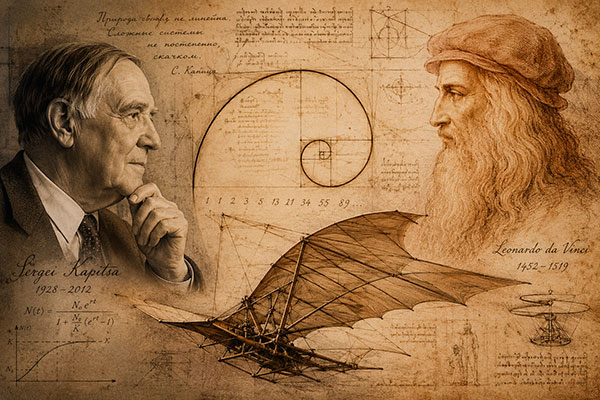
When the July heat lulled the stock market into complacency, and most investors were already mentally packing their suitcases for the holidays, Europe’s financial ocean suddenly began to move. Calm gave way to storm: the market received not merely news, but those subtle yet tectonic signals capable of changing the trajectory of the entire European aviation industry.
In this silence, the very nonlinear music written about by Sergei Kapitsa began to sound. Several currents, invisible until now, converged at a single point, transforming the aviation sector’s prolonged nosedive into a runway.
The American firm Apollo Global Management offered £5.7 billion for EasyJet, surpassing Castlelake’s proposal and effectively launching a battle for one of Europe’s largest carriers.
At the same time, Donald Trump once again stated that an agreement with Iran remained possible.
Oil prices continue to fall, and with them one of the largest cost items faced by airlines is also declining.
At first glance, these events appear to have nothing in common.
Yet it is precisely here that an interesting analogy arises with the work of Sergei Petrovich Kapitsa — an eminent physicist, Doctor of Physical and Mathematical Sciences, professor, Corresponding Member of the Russian Academy of Sciences, and a researcher of the nonlinear development of complex systems.
Kapitsa showed that complex systems almost never develop evenly. For a long time, individual events appear independent and insignificant; then, however, they reach critical mass, begin to reinforce one another, and move the system into a new qualitative state.
This is exactly what European aviation looks like today.
The struggle among major investment funds for EasyJet, the decline in oil prices, and the possible easing of geopolitical tensions surrounding Iran are no longer three separate news items. They are three mutually reinforcing factors.
If this logic proves correct, the market may begin to revalue not only EasyJet, but the entire sector. Investors’ attention is likely to return first to Deutsche Lufthansa, Air France–KLM, International Airlines Group (IAG), Wizz Air, and Norwegian Air Shuttle.
Andrievskii Verdict
Allow me to draw an intellectual analogy.
As a long-time admirer of the works of Leonardo da Vinci and Sergei Petrovich Kapitsa, I have always tended to view financial markets not as a collection of isolated news headlines, but as the behaviour of complex systems.
Kapitsa demonstrated that development rarely follows a linear path. For long periods, change appears almost imperceptible. Then, several seemingly independent processes begin reinforcing one another, and the entire system shifts into a new qualitative state. Leonardo, in turn, saw recurring geometric patterns throughout nature, while the Fibonacci spiral has become one of the most recognisable symbols of such development.
Of course, this does not mean that European aviation literally follows the mathematics of the Fibonacci sequence. Nevertheless, the analogy appears remarkably compelling.
Until recently, the sector existed in a state of gradual adaptation. Expensive oil, geopolitical uncertainty, and sustained pressure from short sellers were perceived as separate challenges. Today, however, these forces are beginning to converge at a single point. Apollo's and Castlelake's battle for EasyJet, declining oil prices, and the prospect of easing tensions surrounding Iran are no longer isolated events. They are becoming parts of a single system, with each factor reinforcing the others.
It is precisely at moments like these that markets are capable of moving from a period of waiting into a period of revaluation.
Professional capital rarely pays billions for yesterday. It pays for tomorrow's value.
Therefore, the most interesting question today is no longer, "Why is Apollo interested in EasyJet?" but rather, "Who might be next?"
The answer remains unknown. Yet if European aviation has indeed entered a new cycle, investors' attention will inevitably begin shifting towards other publicly traded carriers, particularly the low-cost airlines.
And that raises one final and rather intriguing question: what is your view on the future of Wizz Air?
Aleksei Andrievskii | Advisory Board Member, Bendura Bank AG | Liechtenstein