Strategic Minerals Plc (SML.L): Why Ore Grade May Matter More Than Deposit Size
Following the UK government's £71 million investment in Tungsten West Plc (TUN.L) through the National Wealth Fund, investor attention has increasingly focused on Britain's critical minerals sector. Yet one of the country's other strategically important tungsten projects — Redmoor, owned by Strategic Minerals Plc (SML.L) — has largely remained under the market's radar.
It is worth noting that the Redmoor and Hemerdon projects are located relatively close to one another in southwest England and both belong to the historic Cornubian Tin-Tungsten Province. However, they are two separate mineral deposits located in different areas and are not part of the same geological ore body.
The Hemerdon project, developed by Tungsten West, contains approximately 218 million tonnes of ore and around 326,000 tonnes of tungsten trioxide (WO₃).
By comparison, the Redmoor project is considerably smaller, containing 17.4 million tonnes of ore and approximately 85,800 tonnes of WO₃. In terms of total ore, Redmoor is more than 12 times smaller, while its total contained tungsten resource is roughly 3.8 times lower.
When projects are assessed solely on the size of their resource base, Tungsten West clearly has the advantage. From an investment perspective, however, deposit size is only one factor. Ore grade, potential production costs and overall project economics are equally important considerations.
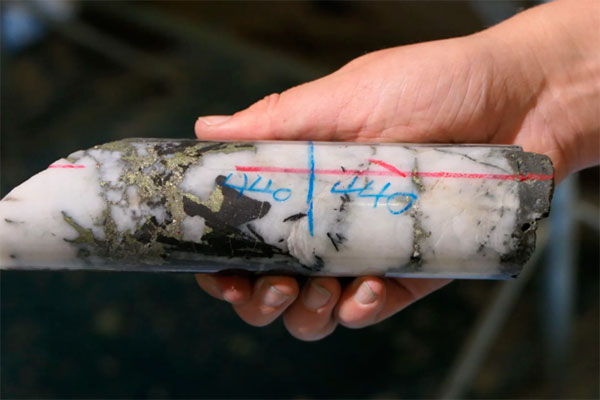
This is where Redmoor stands apart from Hemerdon. The project reports an average tungsten grade of 0.49% WO₃, compared with approximately 0.15% WO₃ at Hemerdon. In other words, Redmoor's tungsten grade is more than three times higher.
A higher ore grade means significantly less material must be mined and processed to produce the same amount of concentrate. This has the potential to reduce mining and processing costs, lower waste volumes and improve operating margins.
Redmoor also benefits from a polymetallic resource. In addition to 85,800 tonnes of tungsten trioxide (WO₃), the latest resource estimate includes approximately 29,000 tonnes of tin and 76,300 tonnes of copper. As a result, the project has multiple potential revenue streams and is less dependent on the price performance of a single commodity.
The latest economic assessment of Redmoor is also noteworthy. According to the company, the project has an estimated post-tax Net Present Value (NPV) of approximately US$1.54 billion, an Internal Rate of Return (IRR) of around 40%, an expected 29-year mine life, and estimated initial capital expenditure of approximately US$110 million. The company also notes that these figures are preliminary and are based primarily on an Inferred Mineral Resource.
Andrievskii Verdict
The primary reason Strategic Minerals appears potentially undervalued is the significant gap between the estimated value of the Redmoor project and the company's current market capitalization.
According to the latest economic assessment, Redmoor's post-tax Net Present Value (NPV) is approximately US$1.54 billion, while Strategic Minerals' market capitalization stands at around £150 million (approximately US$200 million). In other words, the project's estimated value is roughly seven to eight times greater than the company's current stock market valuation. Naturally, NPV should not be equated directly with market capitalization, as it is a model-based valuation that depends on assumptions regarding future commodity prices, capital expenditure, financing conditions and the successful execution of the project.
Investors should also recognize that Redmoor's higher ore grade does not eliminate project execution risks. Unlike Tungsten West's Hemerdon project, which is designed as a large-scale open-pit operation processing relatively low-grade ore, Redmoor is planned as an underground mining operation. As a result, the project's success will depend on effective geotechnical management, groundwater control and compliance with the United Kingdom's stringent environmental regulations.
For this reason, the Pre-Feasibility Study (PFS) will represent one of the project's most important milestones. Its findings should allow investors to assess the company's ability to manage these risks while further validating Redmoor's economic fundamentals.
Both projects are strategically important to the United Kingdom and have the potential to strengthen domestic supplies of critical minerals. Tungsten West's Hemerdon project has the scale to support tungsten production for decades and could become one of the cornerstone assets of the UK's tungsten industry. Strategic Minerals' Redmoor project, although significantly smaller, offers substantially higher ore grades, exposure to tin and copper alongside tungsten, and a notable disconnect between its estimated project value and the company's current market capitalization.
From an investment perspective, the two companies should not necessarily be viewed as competitors, but rather as complementary opportunities. Tungsten West represents exposure to scale, long-life production and a large strategic asset. Strategic Minerals offers exposure to a smaller but higher-grade project with attractive economics and significant potential for valuation re-rating. For investors seeking diversified exposure to the tungsten sector, Strategic Minerals may therefore represent a compelling complement to larger industry participants.
Aleksei Andrievskii | Advisory Board Member, Bendura Bank AG | Liechtenstein