ANDRIEVSKII.CH | Scandium: A Bet on a Metal the World Can Hardly Replace
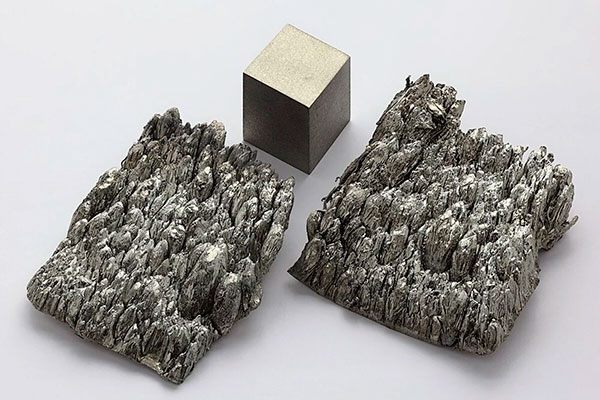
So, let's talk about Scandium.
It's time to shed some light on this position. Not because the market has already reached a final verdict, but rather because, as often happens, it is still focused on more obvious opportunities.
Building positions in small resource companies is rarely a quick process. Liquidity is limited, news flow is sparse, and the market can ignore fundamental changes for months. That is precisely why these ideas are accumulated early—while the sector remains largely overlooked by the broader investment community.
A portfolio diversified across critical minerals allows investors to recognize shifts in investment cycles before they become obvious. In recent years, capital has sequentially moved through lithium, rare earth elements, antimony, graphite, germanium, and tungsten. Investment has consistently followed government policies, geopolitical developments, and concerns over supply shortages. Today, Scandium is increasingly joining that list.
The reason is straightforward. Until recently, demand for Scandium was largely confined to laboratories and highly specialized industrial applications. Today, however, demand is increasingly being driven by the defense industry, aerospace, and the technological sovereignty initiatives of the world's largest economies.
Scandium is one of the rarest critical minerals on the planet. Unlike copper, nickel, or lithium, it is rarely mined as a primary commodity. Most of the world's supply is recovered as a by-product of processing nickel, titanium, and rare earth ores. As a result, global annual production of Scandium oxide is measured in only a few dozen tonnes. This unique supply structure makes the market exceptionally sensitive—even a relatively modest increase in demand can significantly alter the supply-demand balance.
The true value of Scandium lies not in the metal itself, but in its ability to dramatically enhance the properties of other materials. Adding less than 0.5% Scandium to aluminum alloys substantially increases their strength, corrosion resistance, and fatigue performance while simultaneously reducing weight. This is why aluminum-scandium alloys are increasingly viewed as one of the most promising materials for aerospace, space exploration, hypersonic systems, unmanned platforms, additive manufacturing, and next-generation transportation technologies. In addition, Scandium is used in solid oxide fuel cells, one of the most promising technologies in the hydrogen energy sector.
Another defining characteristic of the Scandium market is the absence of a traditional exchange-traded marketplace. Scandium oxide is sold primarily through direct contracts between producers and end users, making pricing relatively opaque and highly dependent on material purity, shipment size, and contractual terms.
Following a downturn in 2020–2021, the price of 99.99% Scandium oxide declined from approximately US$3,800/kg to around US$2,200/kg, a drop of nearly 42%. By 2024, however, the market had recovered, with transactions once again taking place within the US$3,000–4,500/kg range, representing gains of approximately 36–105% from the 2021 lows.
The next catalyst emerged in 2025, when China introduced export restrictions that heightened concerns over supply security for Western manufacturers. These measures renewed investor interest in Scandium projects located outside China. At the same time, several long-term government supply agreements were reportedly signed at prices of up to US$6,250/kg, highlighting both the strategic importance of the metal and buyers' willingness to pay a significant premium for secure, reliable supply.
It is therefore hardly surprising that the combination of a small market, constrained supply, and rapidly expanding strategic demand has, for the first time in many years, placed Scandium at the center of U.S. industrial policy.
A turning point came in August this year in Washington, D.C. The U.S. administration convened the largest gathering of mining industry executives focused on critical minerals in decades. President Donald Trump described critical minerals as "the raw materials that underpin American strength—from advanced weapons systems to the automotive industry," while simultaneously announcing a broad package of support for strategically important mining projects.
For the Scandium market, however, the most significant announcement came from the U.S. Department of Defense, which committed US$400 million to Sunrise Energy Metals Ltd. (ASX: SRL) to advance the Syerston Project in Australia. In effect, this represents the first major government investment aimed at establishing an independent Western Scandium supply chain. For a market that has operated for decades with minimal large-scale capital investment, the announcement marks a genuine turning point.
Government backing for the sector's flagship project has effectively sent a powerful signal to the broader industry. Since then, investor attention has increasingly returned to companies controlling some of the world's largest Scandium deposits.
Today, the most advanced project belongs to Sunrise Energy Metals Ltd. (ASX: SRL), which currently has a market capitalization of approximately A$3.7 billion. Its Syerston Project in Australia hosts the world's largest known high-grade Scandium resource and is widely considered the leading candidate to become the world's first large-scale primary Scandium producer. As such, the project is increasingly viewed as the cornerstone of a future independent Western Scandium supply chain.
Scandium International Mining Corp. (TSXV: SCY), with a market capitalization of approximately C$63 million, is developing the Nyngan Project, one of the world's most advanced Scandium projects approaching construction readiness. The company has completed the key stages of technical development, and the project's next phase will largely depend on securing long-term offtake agreements with industrial customers. If aluminum-Scandium alloys achieve broader commercial adoption, Nyngan has a strong chance of becoming one of the first new primary sources of Scandium supply outside China.
Scandium Canada Ltd. (TSXV: SCD), with a market capitalization of roughly C$100 million, stands out as one of the sector's more compelling growth stories. Its Crater Lake Project in Québec is among the largest undeveloped Scandium deposits in the world. At the same time, the company is expanding Scalium+, a business focused on commercializing aluminum-Scandium alloys for aerospace applications, welding consumables, and additive manufacturing. This strategy positions the company to participate not only in mining but also in the higher-margin advanced materials segment of the value chain.
Mount Ridley Mines Ltd. (ASX: MRD), currently valued at around A$55 million, has long remained overshadowed by better-known peers. However, following a significant resource upgrade, its Grass Patch Project has emerged as one of the world's largest known Scandium deposits. Although the project is still at an early stage of development, the scale of its resource already places the company among the potential beneficiaries of a growing Scandium market.
Australian Mines Ltd. (ASX: AUZ) currently has a market capitalization of approximately A$76 million and retains an interest in the Flemington Project, one of the largest Scandium deposits globally. While the company has experienced a challenging period, the asset itself remains strategically significant. If the global Scandium market expands to industrial scale, the value of projects like Flemington could increase far more rapidly than current market valuations suggest.
Andrievskii Verdict
Most commodity cycles follow a familiar pattern.
First, governments designate a mineral as strategically important. Next come subsidies, preferential financing, and long-term policy support. Industrial capital follows. Financial markets typically arrive last.
In my view, Scandium is now entering precisely that stage.
Only a few years ago, Scandium remained a niche material serving a limited number of specialized industries. Today, it is increasingly becoming part of government industrial policy, defense initiatives, and efforts to build resilient supply chains. These structural shifts are often the catalyst for the re-rating of an entire sector.
That does not mean the market is without risk. On the contrary, it remains small, relatively illiquid, and highly sensitive to changes in supply and demand. However, the history of critical minerals suggests that markets of this kind can evolve from overlooked niches into strategic assets far more quickly than most investors expect.
If the past decade belonged to the metals of the energy transition, the next may well belong to the metals that underpin technological and defense sovereignty. Scandium has all the characteristics required to become one of them.
Key Risks
Despite growing interest, the global Scandium market remains one of the smallest among all critical minerals. The commissioning of even a single large-scale mine could materially alter the supply-demand balance.
The widespread adoption of aluminum-scandium alloys will also take time. Should the aerospace, defense, and automotive industries transition to these materials more slowly than expected, demand growth could fall short of current projections.
Another source of uncertainty is China, which continues to play a major role in global Scandium supply. Any change in Chinese export policy could quickly influence market pricing and supply dynamics.
Finally, virtually all publicly listed companies in the sector fall into the small-cap category. These businesses typically exhibit higher volatility, require periodic capital raising, and face long project development timelines.
For these reasons, Scandium should not be viewed as a short-term speculative trade but rather as a long-term investment in the emergence of a new strategic market. If the current trend continues, the key question in a few years may no longer be whether demand exists, but whether producers will be able to supply the volumes the market requires.
Aleksei Andrievskii | Advisory Board Member, Bendura Bank AG | Liechtenstein