Europe’s disclosure push has gone ‘too far’, says Liechtenstein
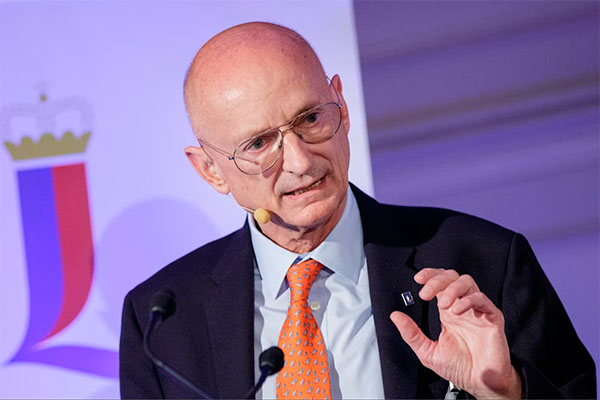
Prince Michael of Liechtenstein accuses EU of ‘bureaucratic zeal’ over anti-money laundering rules
Europe’s drive to expose the true owners of companies has gone “too far” and handed hackers a new target, Liechtenstein has warned, after a cyber attack hit the principality’s beneficial ownership register.
Prince Michael of Liechtenstein, a member of the country’s ruling family and chair of Finance Liechtenstein, told the FT he was “very much in favour of all the anti-money laundering procedures”, but accused Europe of “bureaucratic zeal”.
“This is not only for the financial business; it goes for all businesses. The cost of this disclosure has become enormous,” he added.
The warning comes as Europe pushes ahead with a system linking national beneficial ownership registers across the EU and European Economic Area, including Liechtenstein.
Prince Michael said linking the databases would “multiply the risk” exposed by the Liechtenstein breach in July, in which hackers copied data relating to about 31,000 companies, trusts, foundations and other legal entities.
They obtained information including names, dates of birth, nationalities and countries of residence of beneficial owners. Liechtenstein authorities have said they do not yet know who was responsible or what their motive was.
The prince, who also heads Industrie- und Finanzkontor, a company that sets up and manages trusts and foundations for wealthy families, said the breach was unlikely to check Europe’s appetite for collecting financial information.
“I think it will not wake up the European Commission, unfortunately,” he said.
Liechtenstein, whose financial industry specialises in trusts, foundations and wealth management for international families, has in recent years overhauled its regulatory system as well as adopted automatic exchange of tax information and European anti-money laundering rules.
The register at the centre of the attack was itself part of that transformation, intended to make it easier for authorities to identify the people who ultimately own or control companies and other structures.
Liechtenstein is not an EU member but belongs to the European Economic Area, requiring it to adopt large parts of the bloc’s rules. The prince said the principality had limited ability to resist the direction of European regulation.
The breach follows another uncomfortable episode for Liechtenstein’s wealth industry last year, when western sanctions against Russia left scores of trusts and foundations without functioning trustees or directors after fiduciaries resigned from Russian-linked structures.
Despite the recent problems, Prince Michael said Liechtenstein remained attractive to wealthy international families because of its political stability, strong property rights and predictable legal system.
The financial centre has continued to grow despite the controversies. Client assets managed by Liechtenstein’s 11 banks rose 6.8 per cent to SFr538bn ($659bn) last year, supported by continued inflows of new money.
“We have continuity. We have political stability, a high respect for property rights,” he said.
“Liechtenstein is not a place for the short-term placing [of] assets. It is really for multi-generational, long-term planning for families.”
Source: www.ft.com
Aleksei Andrievskii | Advisory Board Member, Bendura Bank AG | Liechtenstein