ANDRIEVSKII.CH | Buy When There Is Blood in the Streets: Why Funds Are Increasing Their Bets on Wizz Air
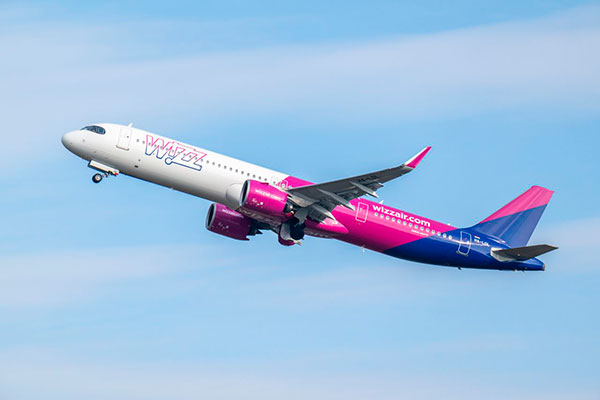
Today, this old investment idea describes the situation surrounding European low-cost carrier Wizz Air remarkably well. While the aviation sector is facing geopolitical instability, sharply higher fuel costs and continuing problems with Pratt & Whitney engines, some major institutional investors are doing the opposite — increasing their positions.
Cobas Doubles Its Stake
According to a regulatory notification, Cobas Asset Management increased its aggregate holding of Wizz Air voting shares from 5.083133% to 10.024466%. As of September 15, funds managed by Cobas controlled 10,376,831 shares. The notification was submitted to Wizz Air on September 16.
In other words, the Spanish asset manager, known for its value-investing approach, has almost doubled its exposure to the airline precisely at a time of heightened uncertainty across European aviation.
“Blood in the Streets”: Why Is Wizz Air Under Pressure?
Wizz Air is facing several significant sources of pressure at the same time.
Pratt & Whitney. Problems with GTF engines have resulted in prolonged groundings of part of Wizz Air's fleet and have become one of the factors limiting the growth of available capacity.
Geopolitics and fuel. The war between the United States and Iran has triggered a sharp increase in costs across global aviation. This is particularly relevant for Wizz Air because of its ultra-low-cost model and the sensitivity of airline economics to fuel prices. At the same time, around 80% of the company's fuel requirements for the next 12 months are hedged, at prices significantly below current market levels.
Capacity reduction. On September 17, Wizz Air announced that it would reduce its originally planned second-half capacity by approximately 5%, adapting its schedule to the changed operating environment.
But this is where the key investment question emerges: are Wizz Air's current problems structural or temporary — and how much of this risk is already reflected in the share price?
During periods of intense fear, markets can move away from fundamental valuations. Irrational pricing during periods of stress is one of the mechanisms through which long-term investors look for opportunities when short-term emotions begin to outweigh the assessment of future cash flows.
In other words, the market may simultaneously price in actual losses, future risks and the most negative possible scenarios. For a value investor, the critical task is to determine where a rational risk premium ends and an excessive discount begins.
Let’s Look at Those Taking a Different View
Cobas is far from the only major institutional investor in Wizz Air.
According to the latest available ownership data prior to Cobas's most recent increase, the largest shareholders included:
- Indigo Partners — 14.17%;
- Indigo Hungary — 10.89%;
- Coronation Fund Managers — 7.57%;
- Causeway Capital Management — 7.06%;
- Cobas Asset Management — 5.08%;
- Pzena Investment Management — 5.00%;
- BlackRock — 4.95%;
- Artisan Partners — 4.63%;
- Magallanes Value Investors — 4.13%.
Following the September transaction, Cobas moved to 10.02%, meaning the ownership table above reflects an earlier reporting date rather than the current Cobas position.
There is another noteworthy signal. Stephen Johnson, a Non-Executive Director of Wizz Air, purchased 15,000 shares on August 19 for £158,706 at £10.5804 per share.
An insider purchase is not a guarantee of future share-price performance, but it is another relevant element of the investment picture.
What Do Investors See Beyond Today's Problems?
The main argument behind the long-term investment case is that management continues to target substantial expansion.
On September 17, at its Capital Markets Day, Wizz Air presented its strategy through financial year 2030.
The company is targeting €10 billion in revenue and a 10% EBIT margin, while expanding its fleet to 335 aircraft and passenger volumes to 127 million annually. Wizz Air also plans to transition fully to an Airbus A320neo/A321neo fleet and is targeting an ex-fuel CASK of 3.00 euro cents.
At the same time, the near-term picture has improved somewhat. Wizz Air upgraded its RASK outlook for the second quarter from a previously expected low-single-digit percentage decline to flat year-on-year growth, supported by stronger summer yields.
The combination is significant: the airline is reducing part of its planned capacity while improving its revenue outlook per available seat kilometre.
That suggests Wizz Air is attempting to adjust the pace of growth to the new cost and demand environment rather than simply pursuing capacity expansion at any price.
Andrievskii Verdict
Cobas is not increasing its position because Wizz Air's problems have disappeared. Quite the opposite — the fund is increasing its exposure precisely amid heightened uncertainty. That is what makes the transaction interesting from a value-investing perspective.
The central investment hypothesis is not that the market must be wrong. It is that irrational pricing during periods of stress can occur when short-term problems receive a disproportionately large weight in the share price relative to their potential impact on the company's long-term value.
The market now has to answer a simple question:
Does the current Wizz Air share price reflect a fundamental deterioration in the business — or an excessive discount for temporary problems?
If engine disruptions, fuel pressures and geopolitical risks gradually ease, while management delivers on its 2030 strategy, today's valuation could look very different in retrospect.
But that remains an investment hypothesis, not an established fact.
And perhaps that is the real meaning behind the old maxim about “blood in the streets”: the most interesting investment opportunities do not necessarily emerge when risk disappears, but when the market is struggling to determine what that risk is actually worth.
Aleksei Andrievskii | Advisory Board Member, Bendura Bank AG | Liechtenstein